“I didn’t dislike where I was, but it didn't feel like what I was supposed to be doing.”
What work were you doing previously?
I was an IT project manager.
What are you doing now?
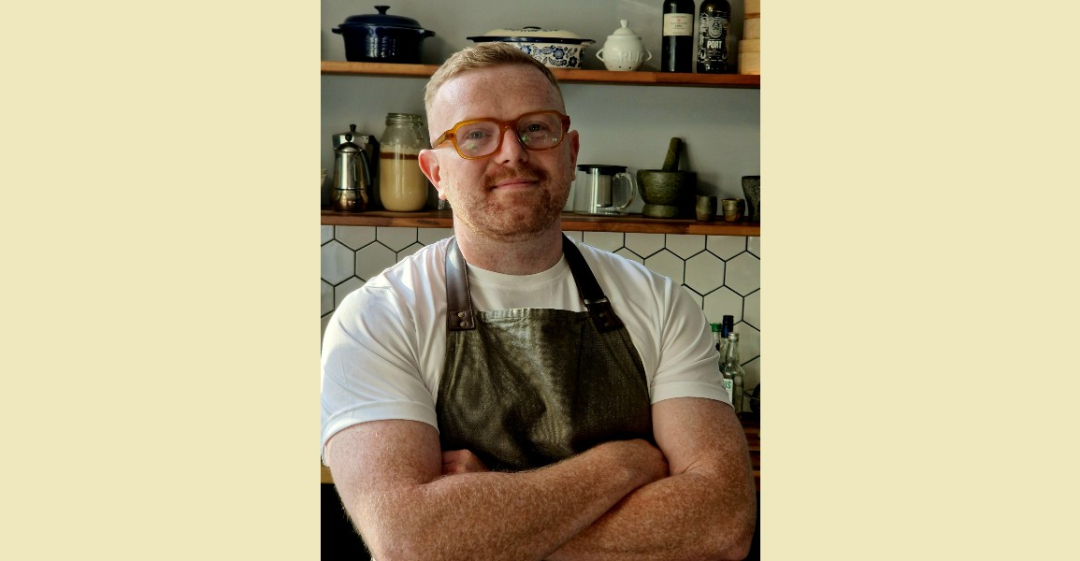
I run a supper club.
I invite eight strangers to my home, they sit around my communal table and I serve them an eight-course tasting menu inspired by flavours that I discovered on my travels in Latin America.
I also run cooking classes as well.
These days, a typical working week is a cooking class on Tuesday, a big, big prep cooking day on Wednesday, and then dinner service on Thursday and Friday nights.
Why did you change?
To be honest, I wasn't massively dissatisfied with my career.
I actually quite liked my job and I had a really good team around me.
But I also had the feeling that somehow, I was in the wrong movie. I didn’t dislike where I was, but it also didn’t feel like what I was supposed to be doing.
The funny thing is that throughout my career, I've had jobs where I hated my manager, the people I worked with and the work, and I wanted to leave.
But when I ended up actually changing career, none of that was the case.
It was more just the fact that I was so ready to run a food business that I had to give it a shot.
How did you choose your new career?
I've always wanted to be a chef.
I never went down that career path, and it was always something that had interested me.
Are you happy with the change?
Completely honestly, yes, I am.
Going from an office job to a kitchen job has definitely taken a toll on my back and my feet!
But even so, I wouldn't change a thing. I'm so happy to be my own boss.
What do you miss and what don't you miss?
I do miss my old colleagues.
I left at a time where I had the best team I've ever had around me. They were people that I really, really liked working with.
I miss a steady income coming in, rather than sitting, waiting and hoping that people will book.
I don't miss daily stand-up calls, or performative meetings where everyone's making up some stuff about what happened yesterday.
How did you go about making the shift?
It was a bit of a slow development, because at first it was just an experiment.
The idea of inviting strangers to my house for dinner was quite exciting.
We initially advertised twelve seats in the Edinburgh Minute, and suddenly we had 40 booking requests for the twelve seats.
And then on the fifth or sixth one that we did, we put it on sale at eight in the morning and at 8.02am, we had a 20-person waiting list. It was at that moment that I realised that there might be something here.
I decided to explore what taking it full time would look like, so I spent a year doing it on the side of my day job while I tried to make it financially viable.
At the start, I didn't make any money. I panicked about not having enough food and people going hungry. I ended up buying four times as much food as I needed, and then pricing it way too low as well.
I spent a year working out the business mechanics, and then I got to a position where I ran the numbers and knew that I could make it work.
That was when the decision was made.
How did you develop (or transfer) the skills you needed for your new role?
I took two months out – unpaid – and went to Mexico to work in restaurants for free.
That experience developed my skill set massively. I was able to do that because I ran the business for a year on the side and never took any money out of it. Everything that I made in that year, I put towards that trip.
Going into Michelin-starred kitchens and learning from really elite-level cooks brought my skills up massively.
The funny thing is there's definitely a transferable skill from project management.
My kitchen has a big whiteboard in it with a Gantt chart to work out what needs to happen when. I don't know how many chefs do that – that's probably a unique IT project manager crossover!
What didn't go well? What wrong turns did you take?
I've been incredibly fortunate in that I've not really had any massive issues with the business so far.
I mean, I've definitely made mistakes, but those have been mistakes in terms of not quite getting stock levels right, or not quite pricing things right. It's never been catastrophic.
So far – touch wood – I've been very lucky.
How did you handle your finances to make your shift possible?
I spent some time running the numbers.
I based it on an 80% capacity, as I don't assume that every event's going to sell out.
And then I had a conversation with my wife. We sat down and we ran our finances. And I said, well, I'm going to pay myself a salary of X. Can we make this work?
And as a team, we made it work.
Basically, as long as I'm 80% booked, I can pay myself, and so far I've been completely sold out, so it's been great.
What was the most difficult thing about changing?
I think there's a mental preparedness you need to have for starting a business.
Like a lot of people, I spent most of my career chasing another salary or a promotion.
So, to make a conscious decision for the numbers to go down is very alien. It's about getting yourself mentally ready for the fact that you're not going to have a stable income.
There are days where I don't have any bookings come in, and when that happens it can be torturous. Then, four days later, ten bookings come in, and you go, oh, actually, I don't have anything to worry about.
You need to be able to tell yourself that it's okay and the bookings will come.
What help did you get?
I'd love to give a shout out to a friend of mine called Megan Vasko.
She runs a consultancy called Salt Strategic, and here she's offering what she's been doing for the past 20 years - helping businesses grow and scale - under her own brand. Gringo was an early test case for Salt.
We had meetings and we discussed strategy and marketing. She was really, really great for being a sounding board, being able to get ideas out and quite good at telling me stuff I didn't want to hear as well.
So she was a massive help. I'd recommend her to anyone.
What have you learnt in the process?
I've learned that you've got to back yourself.
It can be very difficult, and there can be a lot of negative self-talk. You've actually just got to recognise that if you are good at something, then you will succeed and just trust that it will work.
The Nike slogan is correct. Just do it. That’s the way to succeed.
What resources would you recommend to others?
I think everybody's career change is going to be so different.
You should just learn as much as you possibly can, but also, crucially, start doing it. Just do it on the side. It's unbelievable how much you learn by doing as opposed to reading.
And you learn very quickly what does and doesn't work when you just start.
To learn more about Kevin's business, visit https://gringosupperclub.com/
What lessons could you take from Kevin's story to use in your own career change? Let us know in the comments below.