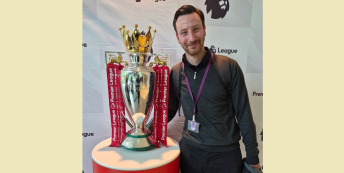
“I wanted to build a business of my own where I could set the standards.”
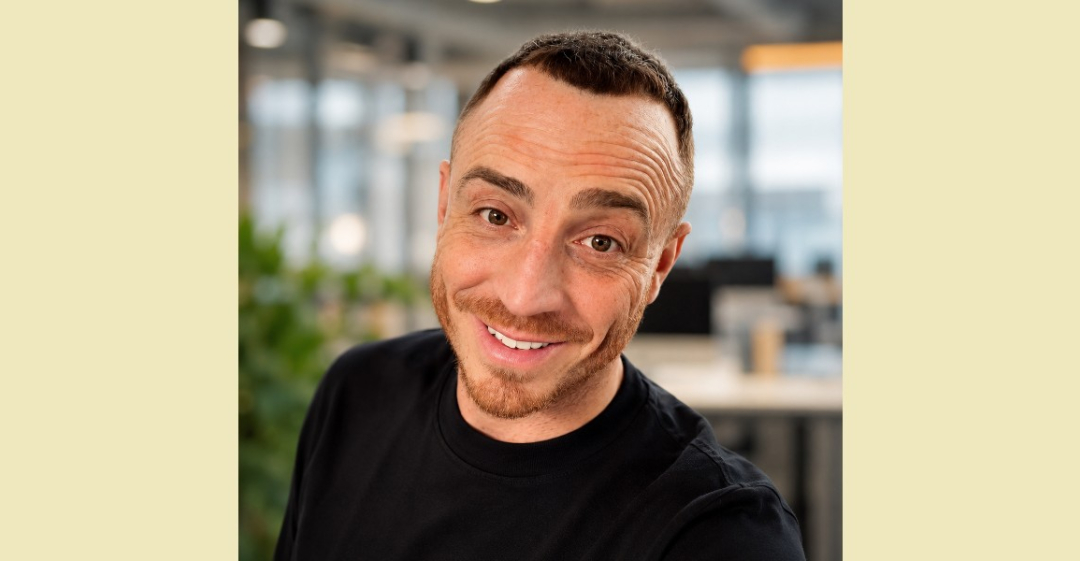
What work were you doing previously?
I spent 15 years at Jaguar Land Rover, working a three-shift pattern on the manufacturing side.
For about six of those years I was also a Health and Safety representative. In plain terms, part of my job was looking at how things were done on the shop floor and asking: is this actually safe, and does it do what it is supposed to do? That question ended up shaping everything that came after.
What are you doing now?
I run my own business, Pure Glow Teeth Whitening, which I launched in February 2025 from Coventry.
We make peroxide-free teeth whitening strips. I do everything myself, from product development and compliance to marketing and customer service. I've also ended up writing for dental trade journals about teeth whitening and the law, which is something I never saw coming when I left a car plant.
Why did you change?
I'd been at Jaguar Land Rover for 15 years.
I worked a three-shift pattern, including six years in health and safety. It was a good job, but I'd reached the point where I could see the next 25 years looking exactly the same, and I didn't want that.
I felt I needed a major change while I still had the chance to make one, so that whatever happened I could look back and have no regrets.
The idea for my business started with something small and personal. Rotating shifts meant I drank a lot of coffee. I smoked at the time and I noticed my teeth getting stained. I had a holiday booked and wanted to feel a bit more confident, so I tried whitening strips.
The peroxide ones gave me sensitivity so bad I had to stop. The peroxide-free ones slid around, whitened patchily, left gel all over my teeth and tasted of chemicals. I was paying for products that couldn't do the basic job.
Coming from health and safety, that really didn't sit right with me. Pain, mess and poor design had somehow become normal in a product people put straight onto their teeth. I kept thinking: somebody should fix this.
Eventually, I realised that somebody could be me. Alongside that, I had been on shifts for a long time and I wanted to build something of my own, where the decisions and the standards were mine.
When was the moment you decided to make the change?
It was on that holiday in Ibiza.
I put on three sets of strips by the pool and not one of them stuck. It was about five pounds straight in the bin and the money wasn't the point. The point was that nothing on the market did what it said on the box.
I turned to my girlfriend at the time and said, "I'm going to create my own teeth whitening brand and fix this." She said I was crazy. Looking back, that was the moment. Everything after it was just working out how.
How did you choose your new career?
In a way the career chose me because it grew out of a problem I had personally.
When I got home, I bought every whitening strip I could get hold of. I used them and wrote down every single fault I found and every complaint I could find from other customers. That list became my product brief.
What gave me confidence was the health and safety habit of testing claims rather than trusting them. I wasn't guessing what people wanted. I had a written list of what was wrong with everything already out there, and a clear idea of what "right" would look like: a strip that stays put, whitens evenly, comes off clean, tastes pleasant and doesn't cause sensitivity.
Are you happy with the change?
Yes, very much so.
What's working is that the product does what I set out to make it do and the feedback has been brilliant. We've had people with sensory issues around oral care, who had never been able to use whitening strips before, describe them as life-changing, and that genuinely struck a chord with me.
The press side has also grown: a piece of mine ran across a group of wedding magazines, the British Dental Journal wrote the product up in its product news, and I have been commissioned to write a series for Dental Nursing. We were also an official sponsor of the Miss England 2026 semi-final.
What do you miss and what don't you miss?
As a Health and Safety rep, helping people was the whole point of the role, and I miss that side of it.
It's also exactly where all of this came from: that habit of looking out for people and asking whether something is safe and does what it says. In a way I still do that job, just for my customers now.
I do miss some of the people I worked with. But as far as the job itself goes, I'm glad to be out and doing my own thing. I don't miss the rotating shifts or the feeling of working hard on something that wasn't mine. Now when I put the hours in, I can see exactly where they go.
How did you go about making the shift?
I didn't jump straight away.
I set up Pure Glow alongside the day job, spending about ten months on development and launching in February 2025. Then last Christmas, JLR offered voluntary redundancy, and I took it. That gave me the push to go full time on the business, and I've funded it myself ever since.
Along the way, there were a few key things that helped me turn the idea into a business:
1. Start with the problem, not the business idea. I wrote down every fault with every product I tried. That list did more for me than any business plan.
2. Find the right people to make it. I contacted several manufacturers. Most weren't interested in changing their standard product. I kept going until I found a supplier and manufacturer who understood the problems I had found and were willing to work on them with me.
3. Iterate properly. It took around ten months of development. They would send me samples, I would test them and reject them, and we went round again. We rejected four formulas before we landed on the one I sell today.
4. Do the boring, important bits properly. Cosmetics are regulated in the UK, so I appointed a UK Responsible Person, and had the product safety-assessed and notified before I sold a single box.
5. Launch small and listen. I set up the website and then added Amazon and TikTok Shop. I paid close attention to every review and message.
6. Tell the story. Once the product was right, I started writing to journalists, editors and bloggers myself. That's how the press coverage and the dental journal writing came about.
How did you develop (or transfer) the skills you needed for your new role?
Honestly, I was nervous that coming from a car plant I wouldn't have the "right" skills to run a consumer brand.
What surprised me was how much transferred. Health and safety taught me to question claims, to read regulations properly, to document everything and to never cut corners on anything that could hurt someone. That turned out to be exactly what a regulated product like this needs, and it's the reason dental editors now ask me to write for them.
I also had a base to build on: I studied business and accounting at college when I was younger, which helped more than I expected once I was doing my own books and pricing.
The things I didn't have, like ecommerce, marketing and design, I learned by doing: a lot of my own research, a lot of trial and error, and a bit of help from AI tools along the way. You don't need to know everything on day one. You need to be willing to learn the next thing when it comes up.
What didn’t go well? What wrong turns did you take?
Plenty.
The first manufacturers I approached just wanted to keep selling their standard product and weren't interested in fixing anything, so I lost time there before finding the right partner. Development took far longer than I expected; ten months felt like forever when I just wanted to launch.
I also underestimated how hard getting noticed would be. I assumed a better product would sell itself, and it doesn't.
How did you handle your finances to make your shift possible?
Simply, I saved hard.
Everything has been funded from my own savings, with no loans and no investors, and it cost me about US$13,000 / £10,000 to get off the ground. That covered the development and samples, the regulatory side (safety assessment, notification and a UK Responsible Person), the first stock, packaging and the website.
The main thing I would say to readers is to keep your overheads tiny at the start and spend on the things that make the product right and legal first. Marketing can grow later; a bad product can't be marketed into a good one.
What was the most difficult thing about changing?
The self-doubt.
Walking away from a steady job and 15 years of familiarity to bet on yourself is scary. There were plenty of nights where I wondered if my girlfriend had been right that I was crazy.
The other difficult thing is how much of it is on you. When you're on your own, every decision, every problem and every email lands on your desk. Learning to keep going when something doesn't work, and not take it personally, has been the biggest lesson.
What help did you get?
Honestly, not much in the way of formal help.
I did nearly all of the research myself. I had the business and accounting I studied at college as a base, and from there it was a lot of reading, a lot of trial and error, and a little bit of help from AI tools when I needed to get my head around something quickly.
The help I did get came from the specialists I paid to do things properly, like my UK Responsible Person on the regulatory side, and from the customers and reviewers who took the time to give honest feedback. I'm used to just getting on with things, and this was no different.
What have you learnt in the process?
That most problems are solvable if you're stubborn enough.
That your background is more valuable than you think, even if it looks completely unrelated. And that being honest, even when it's not the easiest option, builds more trust than any marketing ever will.
What do you wish you'd done differently?
I would've started talking about it publicly much earlier.
I spent a long time getting the product perfect, which was right, but I should've been building an audience and telling my story at the same time rather than waiting until it was all finished. I'd also have started talking to customers about what they wanted even earlier.
What would you advise others to do in the same situation?
Start with a problem you genuinely care about, ideally one you have experienced yourself.
Write everything down. Test your idea in small, cheap ways before you commit everything. Don't underestimate the skills you already have; look at what you actually do day to day and you'll find more transferable experience than you think.
And don't wait to feel ready. I didn't feel ready leaving a fifteen year career. You learn by doing, and the confidence comes after you start, not before.
What resources would you recommend to others?
I didn't follow one book or course; most of it was my own research.
If you're making a physical product, especially anything you put on your body, read the UK government's own guidance on product safety and cosmetics regulations early and find the right specialists for the regulatory side before you sell anything.
AI tools are genuinely useful for getting your head around something new quickly, as long as you check what they tell you. And if you can, pick up the basics of business and bookkeeping. My college business and accounting course was more useful than I ever expected.
To learn more about Daniel's business, visit http://pureglowteethwhitening.com/
What lessons could you take from Daniel's story to use in your own career change? Let us know in the comments below.