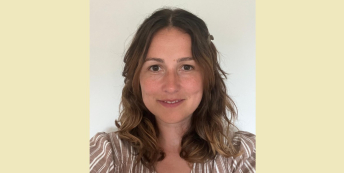
“Even though it sucked the life out of me, I kept retreating into my comfort zone.”
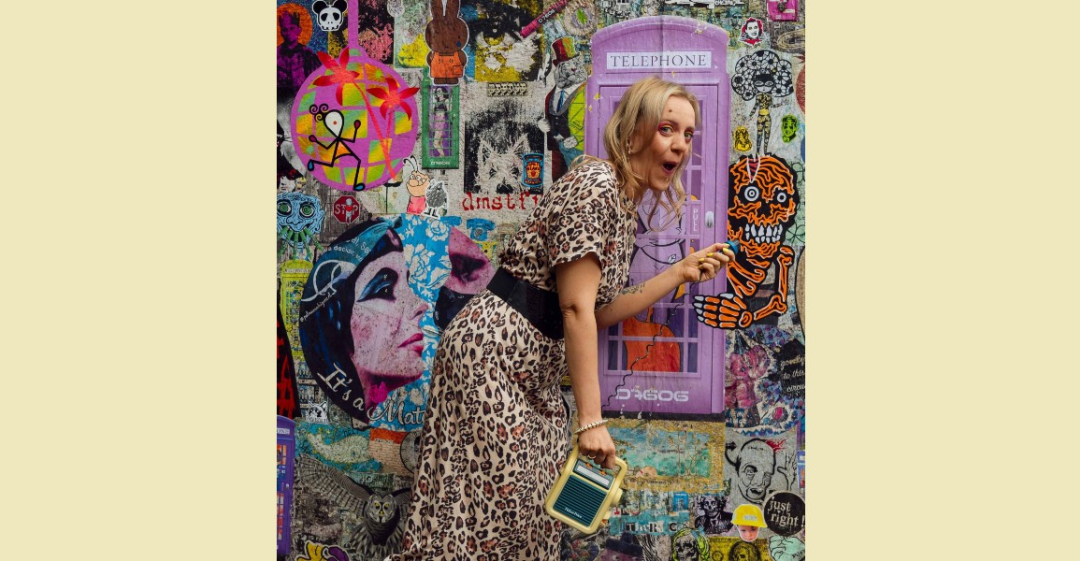
What work were you doing previously?
I worked in the charity sector for 11 years.
I spent eight and a half years working for a national creative arts charity, and then moved to a large national youth charity. My final role there was Senior Fundraising and Marketing Manager.
Alongside the day job, I spent four and a half years presenting and producing a weekly live radio show.
So audio was a big part of my life, even though it wasn't my career yet. Yet.
What are you doing now?
I run a podcast production and training agency called MIC Media.
Put simply, we make podcasts for organisations and show people how to make their own – from shaping an idea and recording, through to editing and getting it out there. We also run workshops and training.
We focus on purpose-led organisations, including charities and NGOs, universities, public sector organisations, local authorities and values-led businesses. So there's a strong thread between what I do now, and what I did in my previous career.
We've worked on more than 60 podcast projects and trained around 3,000 people in podcasting. I've been invited to speak at industry events, and I judge far too many podcast awards!
So the thing that I squeezed into my spare time, I'm now doing as my job.
I'm earning a living from my passion, which is bananas.
Why did you change?
I just wasn't happy.
Working in the charity sector is amazing, because you get up every day knowing that the work you're doing is contributing towards changing someone's life. Very few professions can say that, and that's really special. But it can also be incredibly stressful.
Charities can be vastly underfunded and under-resourced, so people working for them are often giving 200% of themselves to keep things going.
I was tired and stressed. I’d started to realise that I'd spent years backing other people, and I wanted to find out what would happen if I backed myself.
I wanted more autonomy. I was getting a bit bored of being told what to do, and I wanted the freedom to trust my own judgement and do things my own way.
When was the moment you decided to make the change?
It was a compound of moments – years of moments, really.
But there was a period of time in my last ‘proper’ job when things had become more difficult. I was really stressed.
Then I burst into tears in a meeting. And I never cry. If this girl cries, you know there's really something up.
That was the defining moment when I thought, “I don't get paid enough to do this. This is not what I come to work every day to do.”
So that was my breaking point. I didn't have a plan for what came next; I just knew something had to change.
And then the decision was made for me through redundancy.
How did you choose your new career?
I've always loved radio and audio.
When I was a little kid, I had a Fisher-Price tape recorder that I used to make my own radio shows on. As a teenager, I'd sit in my bedroom on a Sunday listening to the charts and recording the songs, trying not to get the DJ at the beginning or end of the track. I studied media production at college, and then at university.
After uni my career took a bit of a swerve into the charity sector. I started as an unpaid intern at my first charity, and left eight and a half years later as a deputy director.
But underneath it all, there was always this love for audio and radio.
So I don't think the move was about discovering a completely new passion.
It was about finding my way back to my old one.
Are you happy with the change?
Yes. Making audio is everything I ever wanted to do.
Sometimes – not very often – I sit back and think, “Blimmin’ hell, you did it!”
I've built a business around something I've loved since I was a kid. I've won awards for it, I'm part of the industry now, and I think I've built a good name for myself.
It hasn’t been plain sailing. It's not one of those awful LinkedIn profiles that you read that say, “I made my first million after six months of trading.”
It's hard. You're responsible for everything. There are ups and downs, and I have to work things out as I go along. It's much harder to switch off, and it's very easy for your job to become your whole personality, especially when you've built something you're really passionate about.
But even with all that, I wouldn't change the decision I made.
I get to make audio for a living. It's all I've ever wanted.
What do you miss and what don't you miss?
I miss the security.
There's something lovely about having a contract and knowing there's a certain amount of money that lands in your bank every month. I'm proud that I've now managed to build that kind of financial stability for myself through the business, but it hasn’t been simple to get there.
I don't miss the lack of autonomy. I like being able to say no. One of my favourite things about running your own business is the power to say no.
I have a fantastic bunch of freelancers I work with, but sometimes I miss the camaraderie of having a bigger team around you. I love office gossip!
How did you go about making the shift?
After the redundancy, I spent a whole year figuring out what I was going to do with myself.
There were big sheets of white paper on the floor of my room, business model canvases and lots of Post-it notes, trying to work out what I could do. Audio was always there in the mix somewhere, but I was too scared to pursue it.
At one point I did an Ikigai exercise with a friend, looking at what I loved, what I was good at and what people might pay me for. The answer that emerged was making radio for charities.
I immediately said to my friend, “I am not working for charities again.” I'd been so burnt out by the sector that I rejected the idea.
I tried other things during that year – freelance marketing and social media work, working with bars and businesses – and I went to media industry events and started building relationships with people in audio.
But I kept falling back into applying for fundraising jobs. Even though it sucked the life out of me, I kept retreating into my comfort zone because I knew it would mean a regular salary.
Then one particular interview went really badly – I think I knew deep down I didn’t want the job.
I was on the train home afterwards thinking, “That was really weird. I don't want to do that again.”
So I got on Twitter and posted: “I'm on my own now, and I want to get into podcasting or radio.”
A woman I really love and respect in the audio industry, who I'd met through networking, saw it and said, “I need some support, and I'll pay you to do it.”
So again, this audio theme had come back around. Finally I decided it was time to start taking it seriously.
And I combined the three things that I love: working with social impact, making nice things for people's ears, and giving people opportunities that they thought were out of reach.
How did you develop (or transfer) the skills you needed for your new role?
Something I've learned is that career changers always know more than they think they know.
I wasn't starting from scratch.
Before I started my career, I did hands-on National Diplomas in media production at college and at university, and I'd been developing my audio skills for years through my side gig in radio.
I also picked up a ridiculous amount of transferable skills in the charity sector.
When resources are tight – and they are in charity – you make things happen. You learn how to do things yourself. Those skills are incredibly important when you're running your own business: how to manage a project, build a budget, communicate with different people and develop relationships.
I've continued to develop the technical side of audio throughout, but I don't see my years in the charity sector as wasted.
I wouldn't have MIC without them.
What didn’t go well? What wrong turns did you take?
I don’t think there’s anything I’d particularly call a wrong turn.
It took time for me to get to where I needed to be, and there have been challenges, but looking back, there’s nothing that feels ‘wrong’ about how I got here.
How did you handle your finances to make your shift possible?
I had built up what I called my ‘F-Off Fund’, basically saving regularly for a rainy day.
It gave me enough of a financial cushion to keep myself going for (roughly) a year.
I had a few jobs here and there, but I got to the end of my year of savings and I remember having to count the pennies when I went to the supermarket.
There was a time someone hadn't paid an invoice, and I remember having about £6 in my account.
I'd run out of money.
It was a real moment of shock.
And I don't say that as a ‘woe is me’ tale, because I know how lucky I was to be able to spend a year exploring my options. I’m aware of how privileged I was in that sense.
But that runway wasn't indefinite, and I didn't have a spouse or partner to help me. I was completely on my own.
It wasn't until after the first year of running MIC that I could relax a bit financially.
Then it took another two years for me to be earning more than I had been in the charity sector when I left.
That was a milestone I’m really proud of.
What was the most difficult thing about changing?
I think the biggest challenge is usually yourself, isn't it?
For a long time, I felt like an imposter in the audio industry. So getting over that was a bit of a challenge. I don't feel like that anymore. I feel like I've earned my place.
And honestly, MIC media started with nothing.
Back in those early days, I didn't have many clients. We had a tiny bit of funding, but really it was all bootstrapped. I had to learn to do the books myself, self-assessment and record keeping. I built my own website, and then there was all the business development on top of that.
I was like one of those one-man-bands with a cymbal under their arm and a drum on their back and a monkey hopping around.
There was never a moment of coasting. I always had to be doing something for the business.
What have you learnt in the process?
I think the biggest lesson is that nothing's ever wasted.
If MIC disappeared tomorrow, I'd be devastated. But I'd also know I was walking away with seven years' experience of starting and running a business on my own, on top of the career I had before MIC.
You don't reset and go back to zero when you shift. You take everything else you've learned with you.
And you probably won't know what's coming with you until you've made the change.
I've also learned how resilient I am.
I knew I was pretty resilient from my time in the charity sector, but I'm super resilient now – and dogged and determined.
I don't give up easily.
What would you advise others to do in the same situation?
Surround yourself with people who are interested in the same sorts of things.
I'm an introvert, so I know it sounds easy to say, but join local groups. Find networking events that have nice people there.
But don't go there with the idea that you have to get something from it. Just show up, and keep showing up. The more you go to classes, networking events and panel discussions, the more you'll see familiar faces, and things will emerge from there.
I hate networking. I can't stand it. But the things that have come out of simply mingling and being a familiar face in like-minded places have been amazing.
And secondly, if you wait until you feel ready, you'll probably never be ready.
I'm usually a big planner, but for this, I didn't have a plan. I didn't have a business plan. If I'd waited to write one, I'd still be waiting now. There was no grand design for my website. I just built it.
So don't wait. Just do the thing.
What resources would you recommend to others?
If you're thinking about starting a business and shriek in horror at the thought of writing a traditional business plan, I'd recommend the Business Model Canvas. It's basically a one-page visual way of thinking through how a business might actually work… who it's for, what you're offering, how you'll reach people, what you'll need and how you'll make money.
I'd also suggest having a go at the Ikigai exercise. It was this exercise that gave me "audio for charities", which I initially completely ignored before eventually realising it was basically my perfect business!
A book that really stayed with me is The Element by Ken Robinson. It's about finding the point where the things you're naturally good at and the things you genuinely love doing come together. There's an idea in it about how your relationship with time changes when you're doing something you love – you can spend hours absorbed in it and it feels like minutes. That really resonated with me.
And Simon Sinek's TED Talk, How Great Leaders Inspire Action, is an oldie but a goodie. It's his "Start With Why" idea – thinking about why you do what you do before getting caught up in what you do or how you do it.
To learn more about Vic’s business, visit: http://www.micmedia.co.uk
What lessons could you take from Vic's story to use in your own career change? Let us know in the comments below.