“I'd become quite ill from stress and overwhelm. I knew I had to change what I was doing.”
What work were you doing previously?
I had worked in various roles within the PR industry for over 20 years.
What are you doing now?
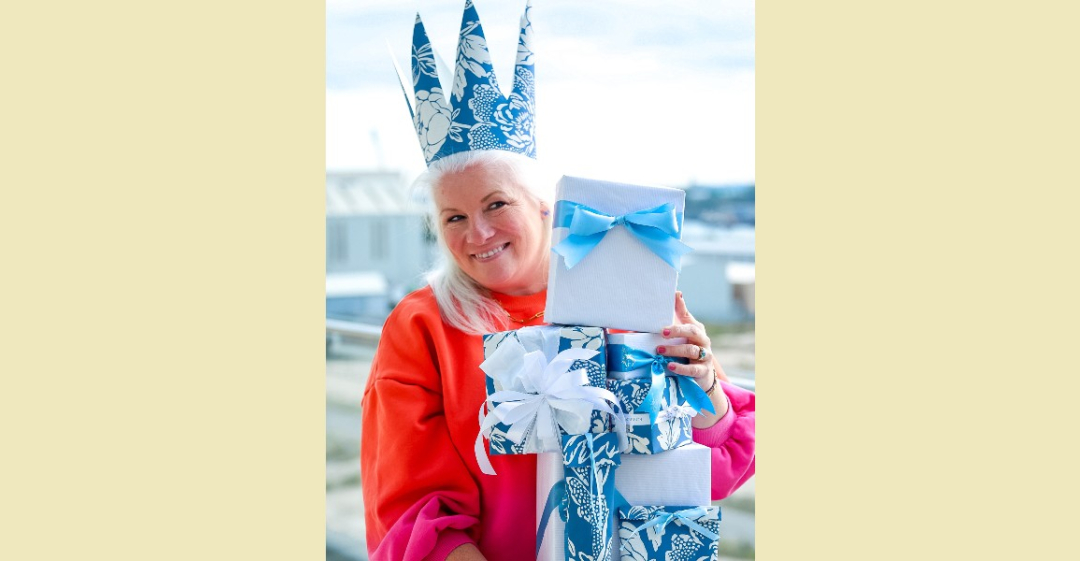
I run a professional gift wrapping service.
It includes mindful workshops, sustainability-themed team building sessions, wrapping for private clients and retailers and ‘speed’ wrapping - when Santa needs a hand at Christmas.
Why did you change?
It was a combination of needing a flexible working pattern to suit my personal life and a strong desire to have a creative role that played to my love of connecting with people.
When was the moment you decided to make the change?
When I realised I'd become quite ill from stress and overwhelm, I knew I had to change what I was doing.
I had to leave a formal 9-5 work pattern, but initially I had no idea what to do. All I knew was I wanted to work with my hands somehow.
How did you choose your new career?
I took some time out to give myself some space and rest.
I explored different options until a friend asked me what my dream job would be. Without hesitating, I replied “to drive around in an old ice cream van wrapping people’s presents all day” and a seed was sown!
I've always adored anything to do with paper, ribbons and finishing touches. Gift wrapping services are common in the USA, London and other parts of the UK, so I thought why not in Newcastle, where I am based.
I feel consumers are looking to unwind more and more through activities such as ‘Sip & Paint’ and corporates need new, non competitive ways for their teams to connect. Busy people are overwhelmed with huge to-do lists and beautiful gift wrapping is one thing AI can't do.
Are you happy with the change?
Absolutely.
I’m only 20 months in, but have secured work with FTSE 100 organisations, a number of law firms, charities and community groups.
My work fulfills me creatively, I love the freedom it brings and I’ve met incredible people I would never have crossed paths with otherwise.
I feel my horizons are much wider, my mental health has greatly improved and I'm proud of myself for trying something totally new. I also think it’s great for our kids to see you don’t have to follow a straight path and you can make a change at any stage in life.
What do you miss and what don't you miss?
I do miss being in a team, brainstorming and bouncing ideas around with other people.
I also miss working together for a common goal and of course the financial stability. But on the other hand, I don’t miss a rigid work pattern and being restricted when I want to try a new collaboration.
How did you go about making the shift?
I completed a professional gift wrapping course to really make sure I loved it as much as I thought I would.
I enjoyed it even more than I had predicted.Then I planned out ways to make it a viable business all year round, not just for Christmas.
That's why I created the sustainability-themed, corporate workshops, for example.
I started the ball rolling slowly, running free workshops for friends, taking pictures, getting feedback, asking for testimonials, starting an Instagram account, getting branding created and updating my LinkedIn profile.
Then I started telling people and raising my profile through networking, marketing, press releases, podcasts, speaking at events, awards and social media.
How did you develop (or transfer) the skills you needed for your new role?
I've always been good at gift wrapping and the course I completed elevated my skills even more.
I inherited an entrepreneurial spirit from my late father and my PR, writing and selling skills have helped hugely.
I think my love for networking has also helped a great deal. I’ve developed my financial skills, although I keep things quite simple as I have very few overheads. I've always been conscious of billing for my time thanks to time spent in PR agencies.
What didn't go well? What wrong turns did you take?
I’ve met a couple of ‘dead ends’ regarding business development and securing new work. But so far, so good.
How did you handle your finances to make your shift possible?
I'm in a very lucky position that it has cost me very little to start my business.
Two grants covered the vital things I needed like branding and a laptop, but I haven’t needed to spend any of my personal money.
Obviously, as a family, we've had a smaller income since I stopped full time work. We've made cut backs where we can and feel that the salary loss is worth the health benefits and freedom gained.
What was the most difficult thing about changing?
Simply telling people my new idea and career. It was scary and also hard to explain succinctly (especially as I was still working it out).
When I wrote a post on LinkedIn explaining my new path, I was overcome with trepidation, but the response was overwhelmingly supportive.
I became braver each time I posted or told people after that. Then I needed to refine how I explained what I do now.
I found this tricky as no one else (that I know of) does all the services I do and some are unique to me. Which, of course, is great for PR but takes care to communicate clearly.
What help did you get?
I found creating a 60-second pitch really helpful. The amazing team at the Natwest Accelerator in Newcastle gave me support here.
Now I tailor these words depending on my audience. I've also found other entrepreneurs and creatives in the North East to be super-supportive.
Thanks to their backing and openness to collaboration, I've grown in confidence with my ideas.
What have you learnt in the process?
So much!
The main thing has been to trust my instincts, my gut feelings and be totally myself.
This way I've attracted and connected with like-minded people I really want to work with. I was strange acting as ‘me’ at the start, as I had normally represented an agency or client professionally.
I’ve learnt things don’t have to be perfect to make a start. As I say in my workshops, create pretty over perfect. Something is better than nothing and effort is just as important.
Again, this is a different view point from old jobs where everything had to be exact before it reached a client.
I’ve also learnt how important and valuable your network is. Look after it and nurture it. And that goes for ourselves too, it can be easy to push very hard when it’s your own business, but this just leads to burnout.
I've learnt I don’t have to prove anything anymore and to do what feels light and easy instead.
What do you wish you'd done differently?
So far, nothing major really.
Everything I've tried has been worth trying, even if it hasn’t worked out.
It might be tempting to say I wish I'd started earlier/ when I was younger, but I’m not sure I had the confidence or it was the right time before now.
What would you advise others to do in the same situation?
If you're considering a new path or idea, start.
It’s never going to be perfect, so you may as well start taking little steps in the right direction. You probably have all you need already, if you really think about it.
What resources would you recommend to others?
I loved reading ‘Do What You Love, Love What You Do’ by Holly Tucker and ‘What’s Your Dream’ by Simon Squibb.
To learn more about Aiofe's business, visit www.forbesfinishings.com
What lessons could you take from Aiofe's story to use in your own career change? Let us know in the comments below.