“I liked the idea of being promoted, but not the actual work those promotions would've brought.”
What work were you doing previously?
I worked as a consultant, starting out at a procurement consultancy straight out of university, before spending five years at an international trade and investment consultancy.
What are you doing now?
I’m now working in media production.
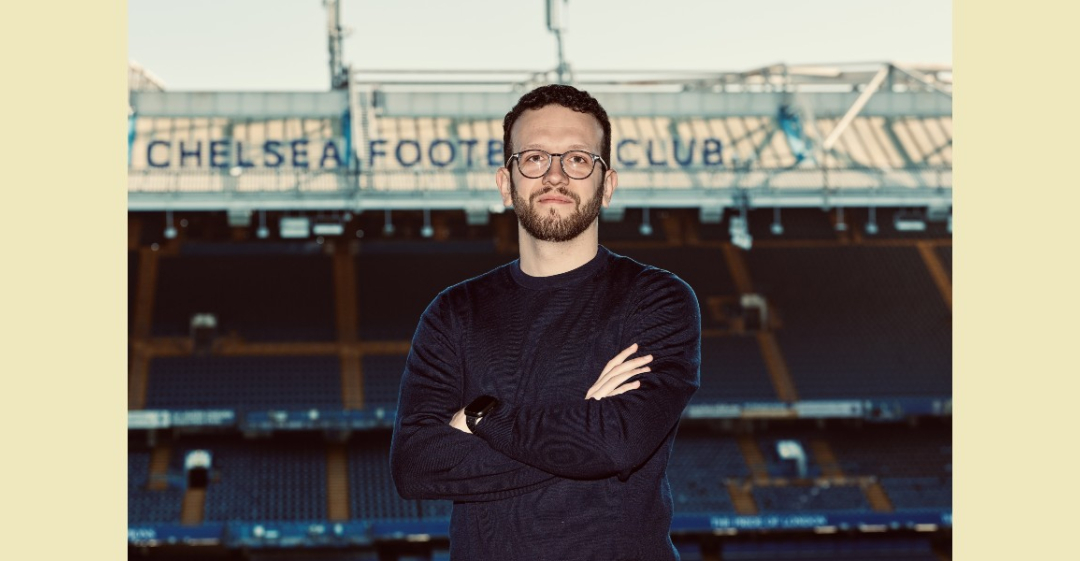
I started a role this year as an Assistant Producer in Chelsea Football Club’s video team.
Why did you change?
I realised after a couple of years that I wasn’t passionate about the job I was doing and the industry I was in.
I didn’t look forward to Mondays. I didn’t like talking about my job outside of work. I liked the idea of being promoted but not the actual work those promotions would have brought.
And I wasn’t one of those people who could just do any old job as long as it paid well. It took me a bit longer to actually make the jump, but I thought I’d take the risk before I had any real responsibilities, like mortgages or kids!
When was the moment you decided to make the change?
There were a few moments during those six years of consulting where I felt like I needed to change something.
There was a period where I thought maybe doing a different type of consultancy in something that interested me more, like sports or politics, would be the solution. I applied and interviewed for a couple of those roles, unsuccessfully.
I then moved to France, staying in the same role, thinking that maybe a change of team and country would be the solution. That didn’t end up being the case, either.
The real career change moment, though, came a few months after my move to France. I thought I had done enough to get a promotion, which I guess would affirm to me that I was in the right role and industry, even if I didn’t really enjoy it.
When that didn’t materialise, that really affected me. I thought I had done enough, putting in long hours of work that, ultimately, I didn’t really enjoy.
After that, I thought ‘What’s the point of carrying on not looking forward to Mondays, not enjoying the work? Do I even want the more senior role I was looking to get promoted into, if it meant more of the same work I didn’t enjoy, with even more responsibility?’
So I decided then and there that I would quit, handing in my notice a couple months later.
How did you choose your new career?
The first thing I did even before I quit my job was buy a book called ‘The Career Change Guide’ by Rachel Schofield.
Quite the on the nose start, but it was a useful start for me to help figure out how to go about deciding what career I wanted. It encouraged me to examine my interests and skills, ask myself questions, and complete exercises to figure out who I wanted to be professionally.
One big takeaway from the book was to talk to as many people as I could in the industries I was interested in. There’s only so much desktop research you can do, and people actually doing that the job will have invaluable, real-life insight into those industries.
So I reached out to friends, acquaintances, and strangers on LinkedIn and talked to as many people as possible. I also used the Careershifters success stories page to look for people who had come from similar backgrounds to me and made big career changes.
I talked to people in industries such as sports consulting, teaching, impact, film and TV, gaming and more.
I ruled out a few, explored others a bit more, and over time I figured out that a career in media production was what I wanted to pursue.
More than once, the people I talked to suggested that my background in consulting meant I had transferrable skills that could suit a career as a producer, such as project management, client management, organisation, communication.
Plus, my languages skills could even set me apart from perhaps more experienced candidates in future.
How did you go about making the shift?
I tried to explore ways of getting relevant experience and tried to network as much as I could.
It was actually something that I was encouraged to do in a Careershifters Workshop that I took part in, just to get out there and try new things, cross paths with people and places.
The workshop was also really encouraging for me in the sense that I saw loads of different participants who were also going through a career change - many of whom were older than me, with families and decades in their industries - so that gave me a boost that I wasn’t alone, and it wasn’t too late.
So, I looked for people to meet and things to do.
I volunteered at the WorldSkills Competition in Lyon as an events coordinator. Through that, I met someone who brought me to work at the World Economic Forum’s Annual Conference in Davos, Switzerland. The latter in particular gave me great exposure to production environments and skills, not to mention the benefit of having it on my CV.
Throughout the process, I was constantly applying to junior roles like production coordinator or production assistant at media production companies where I thought I could get my foot in the door.
Eventually, a London-based podcast production company took a chance on me as a production coordinator, and I’ve not looked back since.
How did you develop (or transfer) the skills you needed for your new role?
A lot of the skills needed to be a production coordinator were things I already had.
Organisation, communication, client management, etc. I ended up finding the first production coordinator role quite easy, so I asked for more work. Soon, I was able to get involved in the more creative side of the business, supporting producers with research, scripting, editing, etc.
Most people will be very open to you sitting in on their work, explaining their processes, teaching you, so I took advantage of that from my colleagues and very much learned from them and learned by doing.
Are you happy with the change?
Very much so.
In the two roles I’ve had post-career change, I’ve done work that I’m a lot more interested in and met some amazing creatives who have taught me so much.
I’m way ahead of schedule in terms of the role I’m currently in too – as a Chelsea fan, it’s pretty much a dream job at this stage of my life and only 18 or so months into my career change.
Moreover, the growth I’ve experienced from this journey and this huge risk that I took has been massive for my confidence and overall happiness.
What do you miss and what don't you miss?
I’m not sure I miss a huge amount to be honest!
At my consulting job I had great colleagues and stability, but I’ve got that now too. It was a better paying job, so I guess I ‘miss’ having a slightly bigger pay check.
Despite taking a big pay cut in order to get my foot in the door in production, I’m on track to get back to my pre-career change earnings soon though, which is great!
What didn’t go well? What wrong turns did you take?
I probably burnt out a little bit once I’d made the first move of my career change.
I was so keen on progressing and accelerating the career move once I’d got my foot in the door that I ended up doing two roles at a company – as a production coordinator and an assistant producer.
It was great for accumulating skills and experience on the job, but it was a lot of work. I always thought that if your work is something you’re passionate about, then it’s much easier to take a lot on, but there’s a balance to be had, and I struggled to find that balance a lot of the time.
How did you handle your finances to make your shift possible?
I was living in Lyon, France when I quit my corporate job.
In Lyon, I was paying half of what I was paying in London for rent – overall, my expenses were pretty low. I’d saved up quite a bit as I was earning decently enough (I’d moved with my London job and thus kept my London salary, plus some savings from London too).
That gave me a buffer to spend a few months dedicating myself solely to the career change. But eventually I ran out of money and had to get a job in France to cover my expenses.
What was the most difficult thing about changing?
Motivating myself to keep going, keep getting out there, carry on applying, not get disheartened, stay the course.
The job I got in France to pay the bills was in a pizzeria, which was tough in and of itself, but add to that the pressure I was putting on myself, thinking ‘I’ve just turned 30, with a master’s degree, and I’m working at a pizzeria. What am I doing?’
In some ways, the career change was easier done while living abroad, as I hardly knew anyone and therefore didn’t have the anxiety of navigating it in front of friends and family or comparing myself to them and their paths.
In other ways, though, it was difficult as I was changing careers in a country whose language I didn’t speak fluently at the time, far from the support of friends and family.
My decision to quit outright from my career and industry, rather than exploring the career change while still employed or going part-time, was beneficial for me. It accelerated my career change, allowing me more time and flexibility to gain experience at events like WorldSkills and Davos.
However, I remember saying to a manager when I was resigning that, given my aversion to risk, I needed to quit outright in order to fully commit to the career change, even if I didn’t have a concrete plan.
I even remember saying that any difficulty I’d face would be ‘future Tiago’s problem’. Well, future Tiago eventually arrived and had to deal with those consequences.
A couple of weeks before I got my first role in production, I was really struggling mentally and having a hard time keeping motivated and continuing to network and apply for roles. But I pushed through, kept going and it ended up working out.
What help did you get?
My fiancée was incredibly supportive and patient with me.
It was a tough thing for her to accept initially, quitting a stable, well-paying job without a concrete plan as we were both approaching 30 and thinking about our future together.
Once I explained how it was something I had to do for my own happiness and growth, she was completely on board and never once questioned my decision. First thing I did once I got my first pay check post-career change was buy an engagement ring to propose to her!
Various members of family and friends were also super supportive and encouraging, as well as helping to connect me with people in my interest industries.
What have you learnt in the process?
To keep going.
That networking isn’t so bad, and strangers that make the effort to meet with you are among the nicest people I’ve ever met. To trust the process.
That there are going to be things you don’t enjoy doing in every job – admin, difficult clients, frustrating processes. That I’m brave enough to change career without a real plan!
What do you wish you'd done differently?
Probably that I’d thought about the finances a bit better.
I was living in France at the time, so it was difficult to navigate the bureaucratic processes of unemployment, but I could've been less proud and benefitted from an unemployment check.
I’d probably be slightly better off today, instead of basically spending all my savings at the time and having to get the pizzeria job. But working there really accelerated my French language level (not to mention access to free, Neapolitan pizza!).
French became really useful when I worked at Davos and then in future job applications – adding it to my languages helped me get this Chelsea job, for example, as I’ll be working with many French-speaking players.
What would you advise others to do in the same situation?
I think I’d advise others to ask themselves plenty of questions before making the leap.
Examine what kind of person you are in a professional context. Is it the specific job that you’re not satisfied with, or the whole industry? Are you comfortable basically starting again in a new industry, if necessary?
Are you able and willing to navigate the financial and social implications of a radical career change? Do you have transferrable skills from other careers/industries that you can market, or skills you can work on acquiring?
Are you fine with getting lots of No’s and ignored messages and applications? Can you keep pushing when you feel like you’re getting nowhere?
If you’re fine with all of the above and end up getting your foot in the door of a new industry, I’d also advise people not to rest on their laurels. Keep networking, keep learning, offer to shadow people, going above and beyond.
What you lack in experience you can make up for in effort and attitude a lot of the time, so I’d advise others to keep prioritising the career change even after you’ve secured a role in a new industry.
What resources would you recommend to others?
The Career Change Guide Book by Rachel Schofield, the Careershifters success stories and the Careershifters workshop – were all useful for me in different ways.
LinkedIn too! Explore different people’s profiles, interesting companies etc. You’ll find that quite a few people have made fairly significant career changes, and people are quite open to talking through their experiences.
I reached out to my current boss on LinkedIn to network and chat about the open Assistant Producer role I ended up at and that helped me stand out from 300+ CVs and LinkedIn applications.
Tiago took part in our 'How to identify exciting, viable options for your next career' workshop. To find out more and book your place, click here.
What lessons could you take from Tiago's story to use in your own career change? Let us know in the comments below.