“I was extremely unhappy in my role. I felt absolutely stuck.”
What work were you doing previously?
I was working in a role called ‘Head of Team Management, Marketing and Communications (Global)’.
A bit of a mouthful, this meant I worked at a technology company line managing a large group of marketing, events and sales professionals in the UK and US.
I’d been with this business for 12 years and had worked my way through the ranks until I ended up in a very niche role that comprised a mix of accountabilities you’d be unlikely to recruit for in an externally advertised post.
What are you doing now?
I’m a self-employed consultant.
I work in the Arts & Entertainment industry, the same sector my previous role (and my entire career) has been in.
I offer several services to a range of different clients:
I work with venues (think theatres and concert halls) to help them make sure that they’re using technology effectively, and that their teams are structured appropriately to support the needs of the organisation.
My focus here is on the box office and marketing operations, so I will also often end up advising them on these areas too. The Arts & Entertainment sector makes use extensive use of technology to understand audiences, sell tickets and promote events.
The companies that provide this technology often need help to understand what their customers need, and how those customers want to buy technology – and this is what I help them understand. This means I help them navigate the cultural sector, how to access it and grow their business.
Finally, I work with individuals to help them develop their professional communication skills. In practice, this means helping people who are struggling to get their message across and want to be able communicate with more confidence.
I help them understand and overcome roadblocks in their way. This has often been a big part of my previous roles and now I’ve made it into a service I can provide to paying customers.
This work has started to be something that my existing clients want to take advantage of alongside the other services they commission me to provide.
It’s early days for my business, and whilst the above services are the starting point for my conversations with new clients, I’ll often end working on a mix-and-match combination of services according to their particular needs.
Why did you change?
I was extremely unhappy in my previous role and had been so for some years.
I knew a change was needed, but felt really unsure about how to move from a niche role in a small industry. I felt absolutely stuck.
I became so adept at glossing over my unhappiness that it became normalised to feel unfulfilled, tired and sad. I nearly wrote ‘at work’ at the end of that sentence, but that feeling of unhappiness touches many parts of life and extends way beyond office hours.
One weekend I was down the familiar rabbit hole of how I could ‘fix my career’, searching for jobs, none of which offered a solution or a path that I was interested in.
I happened to stumble across a Careershifters article, explored the website and found an upcoming workshop that I booked myself into. That was the beginning of me starting to think about career change as something that goes way beyond simply ‘finding a new job’.
When was the moment you decided to make the change?
A few weeks later, I started the Careershifters Career Change Launch Pad. I started to think deeply about actually making a change and how I might go about it, rather than just feeling the pain of not doing anything.
Completely coincidentally, a change in the team at my company started to happen and it became apparent that I could choose this moment to leave – and I decided to do it.
This was a pretty scary decision, but instinctively I knew it was the right one to take and I made it very quickly.
How did you choose your new career?
I have some deeply trusted friends who I’ve worked with at different stages of my career.
I asked them what they thought I could do, and they helped me to reflect on my professional and personal strengths. During the Launch Pad, I'd started to adopt the mantra of ‘look for people, not jobs’. I was able to consider what kind of work I might want to do and who I might want to do that with.
I’ve always worked as an employee and had been continuously employed from my first job as a teenager, through to my early 40s where I find myself now.
I'd often wondered what it would be like to be self-employed, and the Launch Pad helped me to say to myself ‘you won’t know the answer to that until you try it, and you should try it now’.
I thought about this over several months. I needed to think about how to position myself as a consultant, what I’d need to be in place financially to make it work, and understand if there was sufficient work available for me to make a go of it.
I worked to answer these questions as much as I could and then decided to go for it.
Are you happy with the change?
Yes.
It’s challenging, sometimes daunting and difficult. But I'm doing it and getting paid for it. It's absolutely the change I needed to make and I'm happier than I have been for a very long time.
I'm doing the work that I want to do on the terms I can set. I’ve expanded my network considerably and find myself working with a variety of different people, companies and parts of my industry.
I’ve had some really positive feedback from my clients and the confidence I had long ago lost in my previous role has started to return. I feel like I've got my spark back.
What do you miss and what don't you miss?
I've found that working for myself does mean I spend a lot of time working solo, either delivering work for clients or looking for new projects.
I’m a social person, and sometimes I miss having a team of colleagues I can call upon and speak to. This is a common challenge for self-employed people, especially when they are getting going.
I’ve tried to tackle this by developing a network of contacts who work in the same field and are also self-employed, which has really helped when I need some peer support.
What don’t I miss? Feeling trapped, stuck and unhappy. Of course, this new career path has difficult moments and it's not all sunshine and rainbows, but the foundation of the work that I do gives me energy, satisfaction and a degree of challenge that I’ve not enjoyed for a really long time.
So even when I have tricky days, I have confidence I'm on the right path.
It's much easier to overcome big challenges at work when you’re in a career you enjoy, working on tasks you can deliver with confidence.
How did you go about making the shift?
I applied a lot of the tools and techniques I learned from the Launch Pad.
Becoming self-employed requires that you can describe your ‘offer’ clearly, so people can decide if they want to work with you. If you’re a carpenter or a writer, people are able to understand what you do pretty quickly.
‘Consultant’ is a nebulous term and I needed to define to myself what could do and wanted to do, then think about how I describe this to others.
The best way I was able to do this – and then go on to make my shift – was by speaking to others. I used the ‘Connect 3’ technique from Careershifters, conducting informational interviews with contacts to help me prepare for the shift.
I focused on speaking to those who are already self-employed, asking them how they did it, and then I identified potential clients in my network, exploring whether or not they think there was a market for what I was planning to offer.
I’ve completed well over 80 of these Connect 3 style conversations now and more often than not, they are invaluable. They’ve led to paid work and they’ve helped me refine my offer.
How did you develop (or transfer) the skills you needed for your new role?
I spent time discovering my skills whilst on the Launch Pad.
This helped me position the type of work I wanted to do, making sure the two matched, i.e., I thought about what I'm good at and what I thought I could do, the output of which is the basis of the services I now offer to clients.
What didn’t go well? What wrong turns did you take?
Just before the end of the Launch Pad and the end of my previous employment, I had a major wobble and nearly backed out of the shift, considering looking for a conventional job working in-house for a company.
The risk I was taking felt overwhelming and despite the months of work I’d done, I still felt underprepared.
I found it really hard to get the reassurance I needed that ‘it was going to be OK’. My community on the Launch Pad helped me take stock of my situation, feel confident that I had mitigated the risks enough, and I decided to get on with it.
I realised there was a point where I had to take the step and get on with it.
I still don’t really know if things ‘are going to be OK’! It’s early days and I’ve had to shift my thinking to shorter term goals for the time being whilst I establish my business. Honestly though, I’d take that over feeling sad about work any day.
How did you handle your finances to make your shift possible?
I planned meticulously to make sure that I could sustain myself without income for a maximum of 6 months.
I didn’t have a big pile of savings or tons of family income to support me, so this was difficult. There are lots of tools available to help you understand how to plan for this period and minimise costs, and so far it has been OK.
I decided to make choices around things like keeping my car for longer instead of replacing it and reducing monthly outgoings. In practice, these haven't felt like uncomfortable changes and my lifestyle doesn’t feel that different.
There was a day a couple of months into self-employment where three of my project invoices were paid within a few hours of each other. It was a relief to see money coming in rather than going out, and seeing income that I'd generated myself was a really great moment.
What was the most difficult thing about changing?
Without a doubt, the anxiety surrounding going from a predictable salaried job to a career which is far less predictable both in terms of income and the work I'm doing.
What help did you get?
I leaned very heavily on my partner, my family and closest friends.
The Careershifters team helped me enormously as did many of the other participants in my cohort. I don’t think I could have done any of this without having this network in place.
I've really come to understand the power and importance of a network and just how much people are willing to help when you ask.
What have you learnt in the process?
I'm much more resilient than I thought, and I'm good at what I do.
I'd never had to test my resilience in this way until now, and I'd become so unhappy at work that I'd completely lost confidence in my own capability.
I’ve also learned that satisfaction at work goes beyond promotions, pay increases, etc. Of course, these are positive markers, but they aren't the only ways you can derive satisfaction or determine success in work.
What do you wish you'd done differently?
It’s easy to say ‘I wish I'd done this sooner’, but actually I’m not sure that would be the truth.
It took me time to develop the motivation and take a deep enough breath to make the leap.
So whilst I don’t wish I had done anything differently, if I could turn back the clock, I might not have allowed myself to reach such a low ebb before taking action.
What would you advise others to do in the same situation?
Be open to alternative pathways.
I'd considered looking for another job as the only choice open to me, rather than spending time reflecting on what I needed wanted to do, and how I was going to do it.
That quote “'Insanity is doing the same thing over and over again and expecting different results.” springs to mind here. If you’re finding yourself with the Sunday scaries every single week, you need to try a different approach.
Find a way to channel the energy and effort you're applying to feeling terrible to finding a way forward that could make you happy.
What resources would you recommend to others?
The Careers Can Change campaign has lots of useful resources that I’ve made us of during my shift.
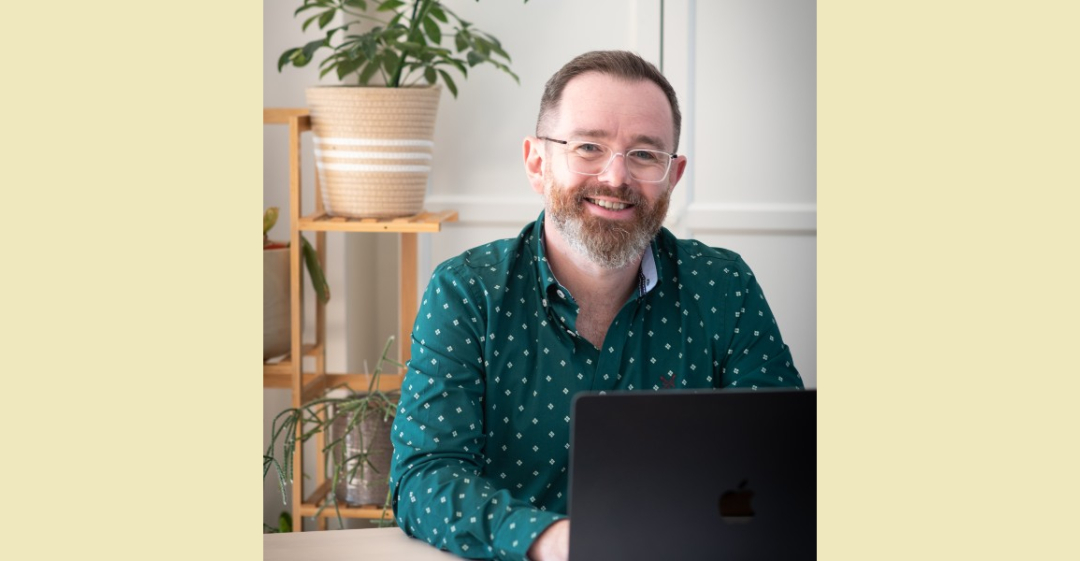
To find out more about Ben's business, visit http://www.benpark.net
What lessons could you take from Ben's story to use in your own career change? Let us know in the comments below.
Ben took part in our Career Change Launch Pad. If you're ready to join a group of bright, motivated career changers on a structured programme to help you find more fulfilling work, you can find out more here.