“I felt unappreciated and suffocated by the corporate box ticking.”
What work were you doing previously?
It’s funny because I’ve changed careers twice.
I changed careers once at 27 and then again at 37. Most recently I was working in management consulting, in public sector operational improvement kind of work.
What are you doing now?
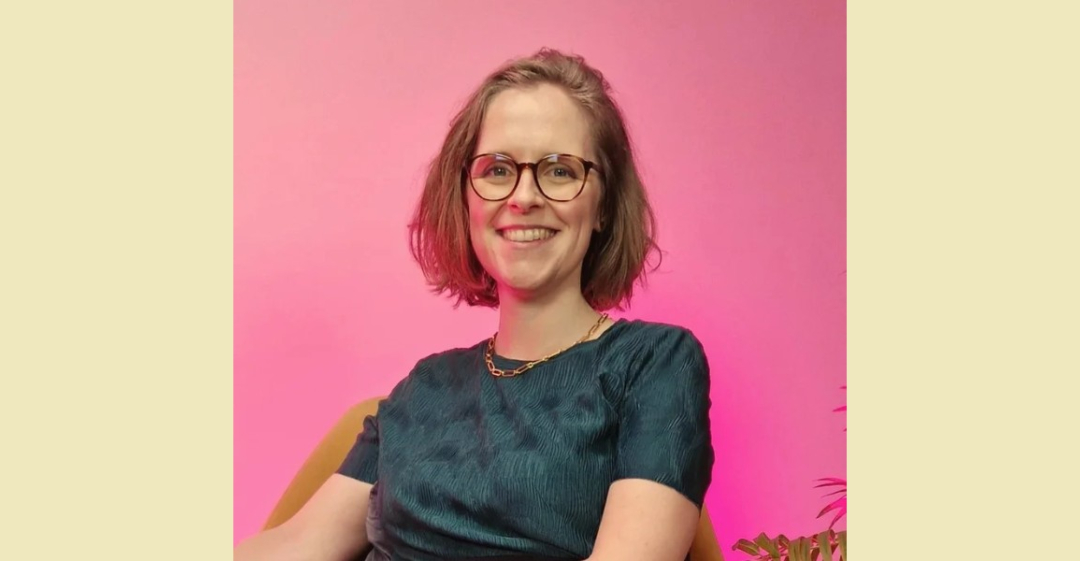
I’m an ADHD and autism coach working with individuals.
I’m also a neuro-inclusion consultant as well, working with businesses.
I help individuals understand their brains a bit better and manage their strengths and work with their strengths and manage their challenges. And then with businesses, I help them create more neuro-inclusive environments for people to exist in.
Why did you change?
I was feeling very burned out.
I felt unappreciated and suffocated by the corporate box ticking that I had to go through. I was working at a big corporate management consultancy and there was a lot of having to do things in a certain way. I was exhausted, really.
When was the moment you decided to make the change?
Well, it was more than just one moment.
I think number one was my ADHD diagnosis. I got diagnosed in March 2023 and that sort of opened up this new world of, oh, okay, I'm learning new things about myself and my brain and what I need. And why I behave in certain ways and things that I find difficult.
Then in the June, I had to take some time off with stress and burnout because I hadn't figured out how to ask for help and wasn't getting any help.
And then just it all became a bit much. And at that stage, I had been doing the same thing, in consulting for 10 years.
When I took that time off in the summer, I was like, ‘do I want the next 10 years to look like the last 10 years?’, I'm not sure that I do.
I stuck it out for a little while longer, but then the real moment was the fact that I had the opportunity to take voluntary redundancy and I realised that it was perfectly timed.
How did you choose your new career?
I had previously trained as a coach in 2018, so quite a long time ago and absolutely loved it.
And at the time, I had just spent five weeks as a tutor and a coach on a course for early career consultants, kind of training them and helping to develop them.
And it was the most fun I'd had in years at my job. And I thought that's telling. So I thought, right, I'm going to go and retrain as a coach, as an executive coach. And then around the same time, I found out that ADHD coaching was a thing, because I'd never heard of it before. I didn't know what it was.
I was in the process of looking for support for myself and I knew that when you did coaching training, you got loads of coaching from your fellow coaches. I found an ADHD coaching training course and decided to go do that so that I could get loads of coaching.
And I'm so glad that I did, because that just opened up a whole new world for me and it's just been transformative.
The stuff that I do now as well, the neuro-inclusion work with businesses was a much later addition. It came out of working with individuals and recognising that the environments they were existing in at work were not supportive.
I could work with them on a one-to-one basis as much as I liked, but then they’d go into these environments that weren't designed for them.
What do you miss and what don't you miss?
The corporate way of having to fit into a certain way of working and ticking specific boxes I don't miss.
I was very much masking who I was in order to fit into that environment. A lot of the rules and social rules seemed so arbitrary to me.
There's loads of stuff that I just really don't miss. And working to other people's beck and call as well. I don't miss the long hours and I'm so glad that I'm now able to work more flexibly with my own brain and energy.
I do miss being part of a team, as it can be quite lonely sometimes. I've tried to manage that by joining a local co-working space, and an online community for solo business owners. Having a community around me again has been really helpful!
What didn’t go well? What wrong turns did you take?
I'm not a very strategic planner – I'm someone who just does the next best thing.
I think there may have been an opportunity to have a bit more coaching or getting advice at the beginning to say right where do you want to go with your business.
At the same time, I'm not sure I would’ve been able to answer those questions two years ago in the same way I'd answer them now! I think just doing it and hoping for the best, sometimes that's the best approach.
How did you handle your finances to make your shift possible?
Having the redundancy payout was really helpful because I was able to invest it in training.
I know a lot of people don't have that when they change and I certainly didn't have that the first time around when I changed careers.
But that was very helpful. I think if I hadn't had that, I probably would’ve thought about building up some savings to make that shift. That just gives you a bit more freedom to invest in the training that you want to do.
What was the most difficult thing about changing?
I think it’s actually related to the financial side of things.
It's moving from having a really nice, regular salary, knowing that you're going to have your money coming in every month and then suddenly moving to this slightly more sporadic income.
That was a big shift because I'm naturally quite a risk averse person.
What help did you get?
As part of my coaching training, I got a lot of coaching, which was really helpful.
And my partner was amazing. Having that kind of support at home was essential.
What have you learnt in the process?
I’ve learnt that I’m very resilient.
In my first career change, I went from science communication into management consulting. That was a learning curve in a different way, whereas this has been going out on my own and doing something totally different.
I've definitely learnt about myself. I've also surprised myself in how well suited my brain is to being a business owner and an entrepreneur.
I’m creative, I build good relationships, all those things that actually I've always been good at, but never really appreciated in myself.
What would you advise others to do in the same situation?
I’d say go for it because I'm very much a believer that we are all the sum of all of our experiences.
So even if you decide to change, and you're like, ‘you know what, this isn't for me’, you've learned a whole load of stuff about, okay, why wasn't this for me?
What worked? What didn't work? And then you've learned some things about that industry that you could then move into something else.
I think it's not like it was 20, 30, 40 years ago, where you’d go to one company and stay there forever. It's better to have those different experiences to bring to future roles.
What resources would you recommend to others?
LinkedIn can be great if you look for people who post about career changes and things like that.
Instagram is also great and I wouldn't have thought that it would be good. Now that I have my own business account on Instagram, there's actually a lot of people out there who have advice around starting your own business, small businesses and all those kinds of things.
I think you want to curate both on both LinkedIn and Instagram. There are some creators out there who are very helpful, interesting and useful to watch rather than just being like, "oh my God, they're so much more successful than me!"
To find out more about Sarah, visit https://kernelcoachingconsulting.com/
What lessons could you take from Sarah's story to use in your own career change? Let us know in the comments below.